10 Discipline and Behavior Management Hacks for Parents
This post contains affiliate links. As an Amazon Associate I earn from qualifying purchases.
1)Stay Consistent with Rules:
Consistency is key when it comes to discipline. Set clear, simple rules and enforce them uniformly. Inconsistent enforcement confuses children and makes discipline less effective.
2)Positive Reinforcement:
Focus on praising good behavior rather than just punishing bad behavior. A simple “great job for putting your toys away” reinforces positive habits and builds self-esteem.
A reusable behaviour and reward chart makes expectations concrete and helps you notice progress instead of speaking only when something goes wrong.
3)Implement a Reward System:
Create a reward chart for specific behaviors (like chores or schoolwork) and give kids stickers or tokens they can trade for a small treat. This motivates them to stay on track without constant nagging.
4)Offer Choices to Avoid Power Struggles:
Instead of issuing commands, offer controlled choices. For example, “Would you like to put your shoes on first or your jacket?” This gives children a sense of control, which often reduces resistance.
5)Use Logical Consequences:
Instead of punishments that don’t fit the crime, use consequences that make sense. If your child refuses to pick up toys, the logical consequence might be taking those toys away for a short period.
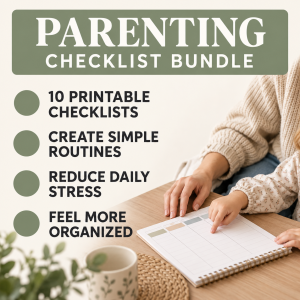
Could family life use a little less chaos? Make everyday routines easier with 10 printable parenting checklists covering school mornings, after-school routines, bedtime, screen time, sibling conflict, healthy habits, travel and more.
6)Model Desired Behavior:
Children learn by watching you. If you want them to be polite, respectful, and patient, demonstrate those behaviors in your interactions. They are more likely to imitate what they see than follow instructions.
7)Set Clear Expectations:
Before going into a situation, explain what behavior you expect. For example, before entering a grocery store, remind your child, “We’re not buying toys today, but you can help choose what fruits we get.”
8)Use Time-Ins Instead of Time-Outs:
For younger children, use “time-ins” to sit with them and talk through their feelings and behavior instead of isolating them. This promotes emotional regulation and understanding of their actions.
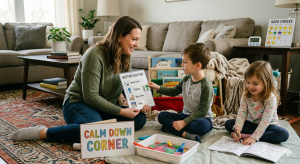
A calm-down corner sensory kit gives children a defined set of quiet tools to reach for while they practise settling their bodies and naming what they feel.
9)Avoid Yelling, Use a Calm Tone:
Yelling often escalates situations. Instead, lower your voice when your child is upset or misbehaving. This not only de-escalates the situation but also teaches them to handle frustration without shouting.
10)Set Age-Appropriate Boundaries:
Ensure your rules and expectations align with your child’s age and developmental level. Too-high expectations can lead to frustration, while too-low ones can result in boredom or entitlement.
Want a little help making everyday family life easier? The Organized Parent Checklist Bundle is there when you need it, with 10 practical printable checklists for some of the routines and challenges parents handle every day.
Practical Extras That Support These Ideas
The right tools should support the advice—not interrupt it. These practical options connect directly to the ideas above and can make them easier to use in real life.
For discipline and behavior management hacks for parents, a Reusable magnetic routine chart can turn expectations into clear visual steps that are easier to follow consistently.
Helpful Family Products
You May Also Like

5 Strategies to Help You Raise an Assertive Child

Fighting Rules for Kids: Helping Children to Navigate Conflict