10 Parenting Hacks for Encouraging Independence
This post contains affiliate links. As an Amazon Associate I earn from qualifying purchases.
1)Let Kids Choose Their Clothes:
Starting around preschool, let your kids pick out their outfits from a set of options. It builds decision-making skills and fosters independence, even if the combinations are sometimes eccentric!
2)Teach Simple Household Chores:
Kids as young as 3 can start helping with simple tasks like setting the table or sorting laundry. Gradually, they’ll be able to take on more responsibility, building confidence and self-sufficiency.
A child-height visual routine chart lets children see and complete familiar steps independently instead of waiting for an adult to direct every move.
3)Create an Accessible Play Area:
Organize toys and art supplies in low, reachable shelves so kids can play, create, and clean up independently. Labeling bins with pictures or words helps them know where everything belongs.
4)Encourage Problem-Solving:
When your child encounters a challenge, instead of immediately stepping in, ask guiding questions like, “What could you try next?” or “What other ways could we solve this problem?” It promotes critical thinking.
5)Teach Them How to Prepare Simple Meals:
By age 6-8, kids can start helping with basic meal preparation, like making sandwiches, pouring cereal, or helping with baking. As they grow older, they can prepare full meals under supervision.
A magnetic family chore board makes shared responsibilities visible and gives children a concrete way to participate in caring for the home.
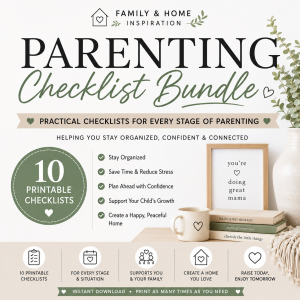
Could family life use a little less chaos? Make everyday routines easier with 10 printable parenting checklists covering school mornings, after-school routines, bedtime, screen time, sibling conflict, healthy habits, travel and more.
6)Give Them Control Over Their Schedule:
For school-aged kids, teach them to use a simple planner to track their homework and activities. This not only builds organizational skills but also helps them learn time management early on.
7)Let Them Take Care of a Pet or Plant:
Caring for a pet (with supervision) or even a small houseplant teaches responsibility. Your child learns about the importance of regular care and becomes more aware of the needs of others.
A front-facing children’s bookshelf lets young readers choose books by their covers and return them without wrestling with a tightly packed shelf.
8)Set Up a Self-Care Station:
Create a space in the bathroom or bedroom with items like a hairbrush, toothbrush, and hand towels that your child can reach and use independently. Teach them to manage personal hygiene early.
9)Encourage Self-Dressing Skills:
For younger kids, buying clothes with easy-to-use features like Velcro shoes or elastic pants allows them to dress themselves without much help. As they grow, they can tackle more complex clothing.
10)Allow Room for Mistakes:
Independence means making mistakes. Whether it’s a messy attempt at tying shoes or a spilled drink while pouring juice, encourage your child to keep trying without jumping in to fix things too quickly.
Want a little help making everyday family life easier? The Organized Parent Checklist Bundle is there when you need it, with 10 practical printable checklists for some of the routines and challenges parents handle every day.
Helpful Family Products
You May Also Like
How to Be a Present Mom: 10 Tips and Ideas for Intentional Parenting

The Complete Guide to Toddler Parenting: 40+Tips You Need to Know